
Making Disciples: Build Zones of Freedom

Updated: Aug 26
Part Five: As we accompany others towards Jesus, we must find places, spaces and times in which we and others can be vulnerable.
Editor's Note: This column is part of a yearlong series on evangelization, breaking down what often feels like a tall order into real, practical, actionable steps towards intentional accompaniment.
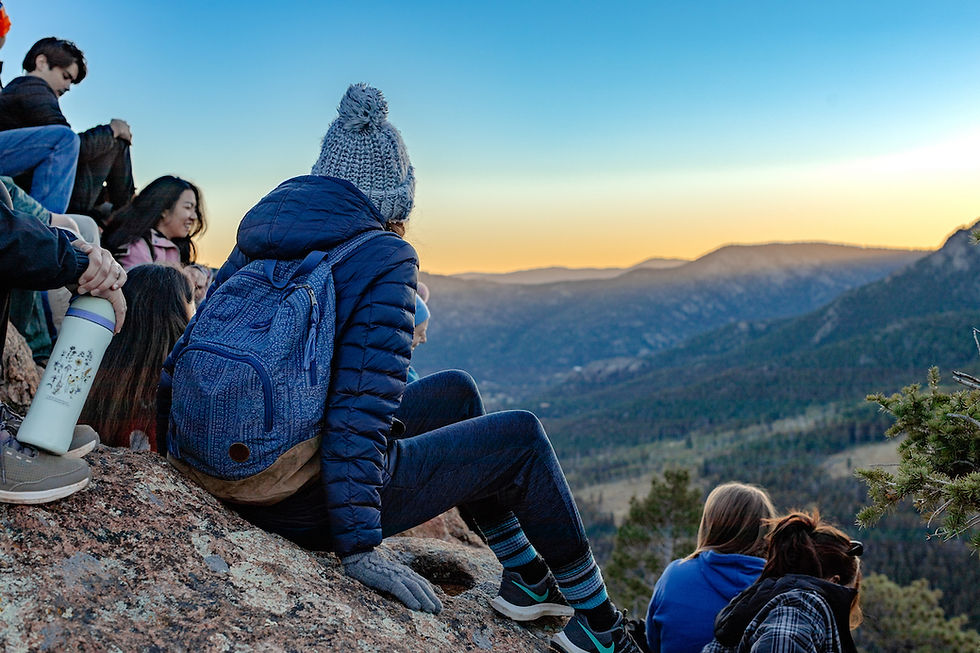
Yellow splattered the range like a Pollock painting. A warm sun shone underneath a crisp, autumn breeze.
James and I took in the views before continuing our hike through the national park. Colorado may lack the oranges and reds of an East Coast fall, but its canary Aspens sprayed against a Rocky Mountain backdrop are just as staggering to behold. Call me biased, but I stand behind that.
As we ventured deeper into the park, my conversation with James grew richer. He opened up about his faith and various struggles he faced, and I was able to encourage him.
When we resumed life as normal in Boulder, our friendship had evolved. It was more natural for us to pick up where we had left off in Rocky Mountain National Park (RMNP) and enter into deeper, more spiritual conversations.
The open air has a way of freeing people up to share their hearts.
Pope St. John Paul II knew this, which is why, as a young priest, he would routinely take young adults into the wilderness to hike and canoe. His goal was to create “zones of freedom,” spaces where people felt open to discuss anything.
And he succeeded. These expeditions notoriously led to profound transformation in those who journeyed with him.
As we build friendship with the person(s) we intentionally accompany and win their trust, we should foster zones of freedom — spaces and times where our friendship can mature and conversations about God can flow.
And just to be clear, zones of freedom aren’t created solely outdoors. JPII would also build them by putting on plays with those he accompanied. When I was a FOCUS missionary, I would build them by, yes, going on hikes but also by going to Illegal Pete’s — the grungier Chipotle alternative. Today, I often build them with a glass of bourbon in a living room or a pour-over in a coffee shop.
Zones of freedom are created less so by the environment or activity (though those certainly help!) but by the intentionality with which you enter into them. They’re created wherever and whenever the pressures of everyday life can be relaxed for a moment and people can feel open to sharing their thoughts, experiences, questions, etc.
James didn’t open up to me in RMNP because of the hike we were on (though I do believe that helped), but because I had spent time building a friendship with him, winning his trust and then putting us in a situation in which I could ask more intentional questions and simply listen.
The key to creating a zone of freedom is fostering an environment that’s both enjoyable and safe enough for vulnerability. But it’s not just vulnerability for vulnerability’s sake that we’re aiming for. As we intentionally accompany someone, we’re aiming for vulnerability so that people can become aware of their “religious sense” — to borrow language from Monsignor Luigi Giussani.
What is one’s "religious sense”? It’s one’s deep desire for God, for the infinite. It’s that restlessness we all share to be attached to our ultimate purpose, that inevitable and subtle dissatisfaction we all experience with everything that’s not God.
Every single person on the planet desires God deep down. Some of us just aren’t in tune with that desire yet.
As we progress in our intentional accompaniment, our job is to help those we accompany get in tune with that fundamental desire. This stirs a curiosity about the faith, a recognition that there's more to this world than meets the eye, and a hunger to discover God (or grow closer to him). Getting in tune with one’s religious sense opens a person up to the fact that they need to change just as much as the next person.
We can’t find people’s religious sense for them, but we can lead them to the doorstep of that self-realization. And zones of freedom help us do just that. Here are three things that help organically create zones of freedom:
Age
An age difference between you and the person you intentionally accompany can more easily foster a zone of freedom. When I was a FOCUS missionary at the University of Colorado, for example, I was a bit older than the typical missionary (around 30). This naturally created a mentor-mentee dynamic with the college students I served, and they were more open because of it. People tend to be more vulnerable with others who have walked the same path but are a little further down the road. I’m sure JPII discovered something similar with his young adults.
38-year-old St. Ignatius of Loyola had this type of friendship dynamic when he went back to school at the University of Paris and became roommates with 23-year-olds, St. Francis Xavier and St. Peter Faber. The same was true for 35-year-old St. Junípero Serra when he sailed across the Atlantic for the New World with his former students and friends, 28-year-old Father Palóu and 26-year-old Father Crespí. And the same was true for 30-year-old Jesus when he walked with his apostles.
Religious art often depicts the apostles as old men because of their wisdom, and we tend to imagine them as old men because of this. However, the apostles are historically believed to have been young — guys in their teens or maybe early 20s. (If you recall, Bet Midrash was for students around 14+.) Jesus, too, had a mentor-mentee relationship with his apostles, not only because of his divinity and renown, but also because of his age.
Though our culture has strayed from multigenerational mingling, intentional accompaniment thrives when older men accompany younger men and older women accompany younger women. Young people need genuine friendship with older people.
That said, peer-to-peer intentional accompaniment and cultivating zones of freedom amongst people the same age is more than possible (and arguably more conventional).
An Adventure
If you’re intentionally accompanying someone and you’ve established friendship and trust with that person, do something fun with them!
Explore the closest national park. Enjoy a round of golf. Check out an art museum. Go sailing. Play a game of pickleball. Bring over a nice bottle of wine. Wake up early for a sunrise hike. Tour a sports stadium. Do something outside of the norm!
And whatever you do, allow the conversation to go to deeper places. Ask the Holy Spirit to guide you.
A Bible Study
A Bible study is a natural environment for people to encourage one another and enter into more reflective conversations.
When someone is part of a more formal group with the expectation that it will discuss deeper matters, it’s sometimes easier for them to be more vulnerable — especially when others are opening up as well.
Bible studies also offer the opportunity to assess who amongst a group of people is ready for more intentional accompaniment. Those who show up regularly and show signs of wanting to go deeper with the Lord are ready for you to take the next step, which I will discuss in my next column. Stay tuned!
+++
Making Disciples is an ambitious, yearlong series of columns meant to equip readers with the formation, both theological and practical, to go and make disciples as Jesus himself commanded in Matthew 28. Through these columns, we hope Denver Catholic readers will join us in preaching the Gospel, so that in Jesus Christ all might be rescued and have abundant life, for the glory of the Father.